

Questions about a Wills , Trusts, estates or guardianship?
Give us a call

804 North Bay Street, Eustis, Florida 32727
Email: [email protected] | Fax: 352.483.0732
Frank T. Gaylord | Tel: 352.589.1731 | Michael J. Rogers | Tel: 352.483.4888
Probate
Probate is the court-supervised process of transferring a deceased person’s property to their beneficiaries or heirs.
It typically includes validating a will or determining intestacy, appointing a personal representative, notifying beneficiaries and creditors, paying outstanding debts and income or estate taxes, and distributing remaining assets.
Under Florida law, certain estates may qualify for a streamlined summary administration based on asset value, asset type, and the provisions of the decedent’s Last Will and Testament.
Trust
Trust Administration
The process of managing and transferring assets held in a trust. There are several types of trusts.
A common type is the “revocable living trust” which is often established by the Settlor (trust creator or Grantor) to transfer assets to beneficiaries upon the Settlor’s death without the need for probate.
Other benefits of trusts can be asset protection, long term property management, reduce or avoid taxes, maintain financial privacy and to specify the control of trust assets in the event of the incapacity of the Settlor.
Guardianship
Guardianship is a court process in which a legal guardian is appointed to manage the personal and/or financial affairs of another person, known as the ward. Florida recognizes several types of guardianship, including voluntary, involuntary, minor, and veterans. In involuntary cases, a judge must determine incapacity before appointment. A plenary guardian receives broad authority over the ward’s assets, medical care, residence, and daily affairs.
Guardianship is often used for incapacitated adults or to manage assets belonging to minor children.
Estate Planning
Estate planning is the process of contemplating and providing for care of an individual’s property and person over their lifetime and death.
Estate planning usually involves counseling and drafting documents relating to Last Wills and Testaments, Trusts, Powers of Attorney, Living Wills, Health Care Surrogates (also known as Medical Powers of Attorney, Designations of Pre-Need Guardians), property ownership (tenancy by the entirety, joint tenant with right of survivorship and tenancy in common) and Powers of Appointment.
History of the Firm
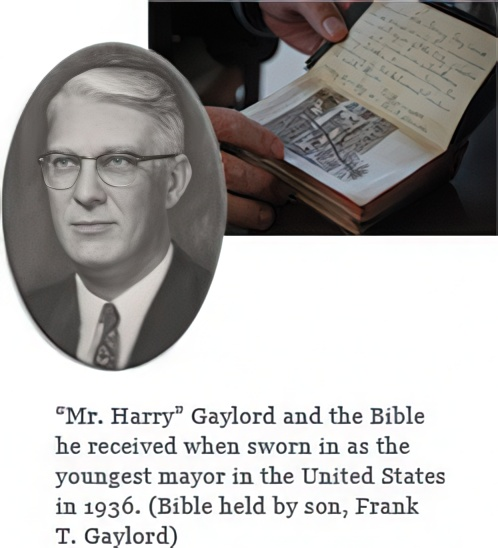
The webmaster asked the other day for a “History of the Law Firm”. I looked around and she was looking at me for a response. I have seen various and sundry histories as I researched the use of other law firms. Those histories tend to be that the law firm is the besttiest, most diverse and efficient to handle a myriad of legal matters. This history will be nothing of that sort. So, if you are reading this history, you may stop now.
The firm was founded by my father, Harry E. Gaylord, after his graduation from Stetson University in 1936 with a Bachelor of Law. By the way, when J.D. was offered to replace the Bachelor degree for the sum of $100.00, he said “thank you very much, but I will remain a Bachelor.” I paid the $100.00, but he never displayed this newly acquired honorary J.D. He became the youngest mayor in the United States at age 21. He, as many of his generation, had the interruption of the Great War during his career, then proceeded to practice law until his death in 1992. He was always referred to as “Mr. Harry” with the fondest of respect from both bar and bench – the local Atticas Finch. I remember on one occasion we decided to purge some ancient files. On a Friday afternoon, he drew the first file from the cabinet and proceeded to spin a tale of the case for an hour. Not to be outdone, I did the same. We purged four files after an afternoon of hard work and never did that again.
I joined the firm in 1971, after completion of law school at Cumberland Law School as a Juris Doctorate. I became board certified in Wills, Trusts and Estates in 1988, and have retained my certification from the Florida Bar since that date. We had several partners through the years, but after his death in 1992, I remained a sole practitioner until 2005, when Michael J. Rogers joined me, practicing primarily in Estate Planning, Probate, Trust, and Guardianship Law.
Mike is a graduate from Stetson Law School in 1994. He practiced as a sole practitioner until we joined in 2005. Mr. Harry and Mike have something in common – they were both born in New York – but we won’t hold that against them. Mike and I have something in common. We both have Juris Doctorate degrees. I don’t think Mr. Harry will hold that against us.
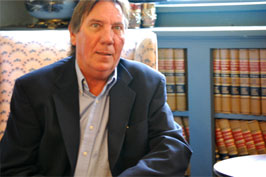
Frank T. Gaylord
-
Personal Background:
- Born in Orlando, Florida, July 14, 1946
- Education: Eustis High School; BBA, Stetson University; JD, Cumberland Law School (1971)
-
Legal Career:
- Admitted to Florida Bar (1971) and Colorado Bar (1988)
- Florida Bar Board Certified in Wills, Trusts, and Estates (1988–present)
- AV-rated by Martindale-Hubbell
- Practice focuses on estate planning and probate
-
Prior Experience:
- Criminal law: Lake County Prosecutor and defense attorney
- Municipal law: Represented multiple cities and police/fire pension boards
- Governmental: Lake County Attorney (1993–1994)
- Quasi-judicial: Certified arbitrator (American Arbitration Association), Circuit Court mediator (2000–2006)
-
Florida Bar Leadership:
- Executive Council, Real Property, Probate and Trust Section (1984–2005)
- Committees: Probate Rules, Probate Law, Trust Law
- Board member, Academy of Florida Trial Lawyers – Commercial Section
-
Served on pro bono and grievance committees
-
Civic and Community Involvement:
- First Presbyterian Church of Eustis – member since 1952; past elder
- Rotary Club – active member and past president
- YMCA – board member and youth coach
- Boards: Pine Meadows Golf & Country Club, PACE Private School, Florida Hospital Waterman, North Lake Hospital District, Lake Community Foundation
-
Teaching: Guardianship Law, Lake-Sumter Community College (1988–1996)
- University service: Advisory Board and Trustee, Stetson University
-
Awards:
-
Lake County League of Cities Community Service Award (2004)
-
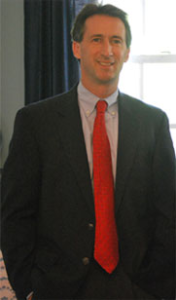
Michael J Rogers
Education:
B.A. in Psychology, State University New York College at Oswego – 1989 J.D. Stetson University College of Law – 1994
Current bar memberships:
The Florida Bar – Admitted 1994
United States District Court, Middle District of Florida
Lake County Bar Association – Past President
Business and community memberships:
Florida Bar Real Property, Probate and Trust Section
Lake County Bar Board of Directors
Lake County Guardianship Association
Florida State Guardianship Association
Florida Bar Grievance Committee – Former Chairperson
Florida Lemon Law Arbitrator – Former Chairperson
American Cancer Society Board of Directors
Lake County Bicycle and Pedestrian Advisory committee – Former Chairperson
Lake Sumter Community College – Former adjunct professor
Personal history:
Born and raised on Long Island, New York. Relocated to Florida in 1991 to attend Stetson College of Law in St. Petersburg. Moved to Lake County in 1995 to work as Assistant Public Defender. In 1997 hired by Morley Law Office, PA, in Tavares, Florida. Practice concentrated on family and guardianship law. Became partner with Michelle T. Morley and formed Morley and Rogers, PA, in 2000. In 2005 joined with Frank T. Gaylord to form Gaylord & Rogers, LLC, after Michelle T. Morley was appointed to serve as Circuit Judge.
Personal Interests: Marathon Running, Triathlons, Mountain Biking, Whitewater Kayaking
Frequently Asked Questions
Here is the most frequently asked questions.
You may use your own social security number for the trust as long as you are the trustee. If the successor trustee begins to function as the trustee, a form SS-4 must be filed with Internal Revenue Service to obtain a separate Federal Tax I.D. number. The forms may be obtained through my office or through your accountant.
The primary purpose of the agreement is to provide a means to manage your affairs and to avoid the probate of your assets. The legal theory behind the trust is that you have divided duties and functions. The trustee manages the assets. The assets are owned by the trust itself and you are the beneficial owner of the assets during your lifetime. Upon your death, the successor trustee will continue the terms of the trust. The successor trustee is directed to make distribution to the named beneficiaries. The trust provides a collateral benefit. It allows you to select the person you want to manage your affairs in the event you are disabled, physically or mentally. The management would be without court supervision and the costs related to the court supervision. There would be a continuing obligation of distribution from the trust and the trustee is required to maintain good records and furnish the beneficiaries with periodic accountings.
The revocable trust to be executed by your provides that • you are your own trustee • you are the beneficiary during your lifetime • you may revoke or amend it at any time during your lifetime and so long as you are mentally competent to do so • your trust agreement provides that the trust becomes irrevocable upon the death or disability of either of you.
The use of this type of grantor trust does not avoid any income or estate taxes, but postpones estate tax. The assets of the trust are taxed as if the grantor has not transferred the assets. The purpose of the instrument is to provide for the management and control of the assets through difficult times and for the distribution of the assets upon your death to the beneficiaries named in the trust without the expense and time of Probate proceeding.
One of the benefits of the trust is that if you become incapacitated or simply desire to relinquish control of the assets of the trust, you may resign as trustee of the trust and the successor trustee will assume the role as trustee. This allows the continuation of the management of the assets in times of emergency without the intervention of formal judicial proceedings.
The creation o f a trust agreement and the transfer of property into it establishes a separate entity from you. It is a contract with the trustee to perform certain acts. Therefore, the entity (the trust agreement) does not die at your death, the obligation of the successor trustee continues. If you are the trustee, and you would no longer be able to continue to perform the functions as trustee, the successor trustee would assume the duties.
A beneficiary is a person who will receive either income or the principal or corpus of the trust.
A trust agreement is a contract between the grantor/settlor and the trustee. The Grantor/settlor delivers assets to the trustee. The trustee has agreed to do certain things with the assets–invest the assets, distribute monies to the beneficiaries of the trust. The trust agreement has been prepared for your are specifically known as an intervivos revocable trust agreement. Said another way, it is a trust created during the lifetime of the settlor/grantor and may be revoked, altered and amended by the grantor/settlor.